Peripheral Nerve Stimulation: A Targeted Approach to Chronic Pain Relief
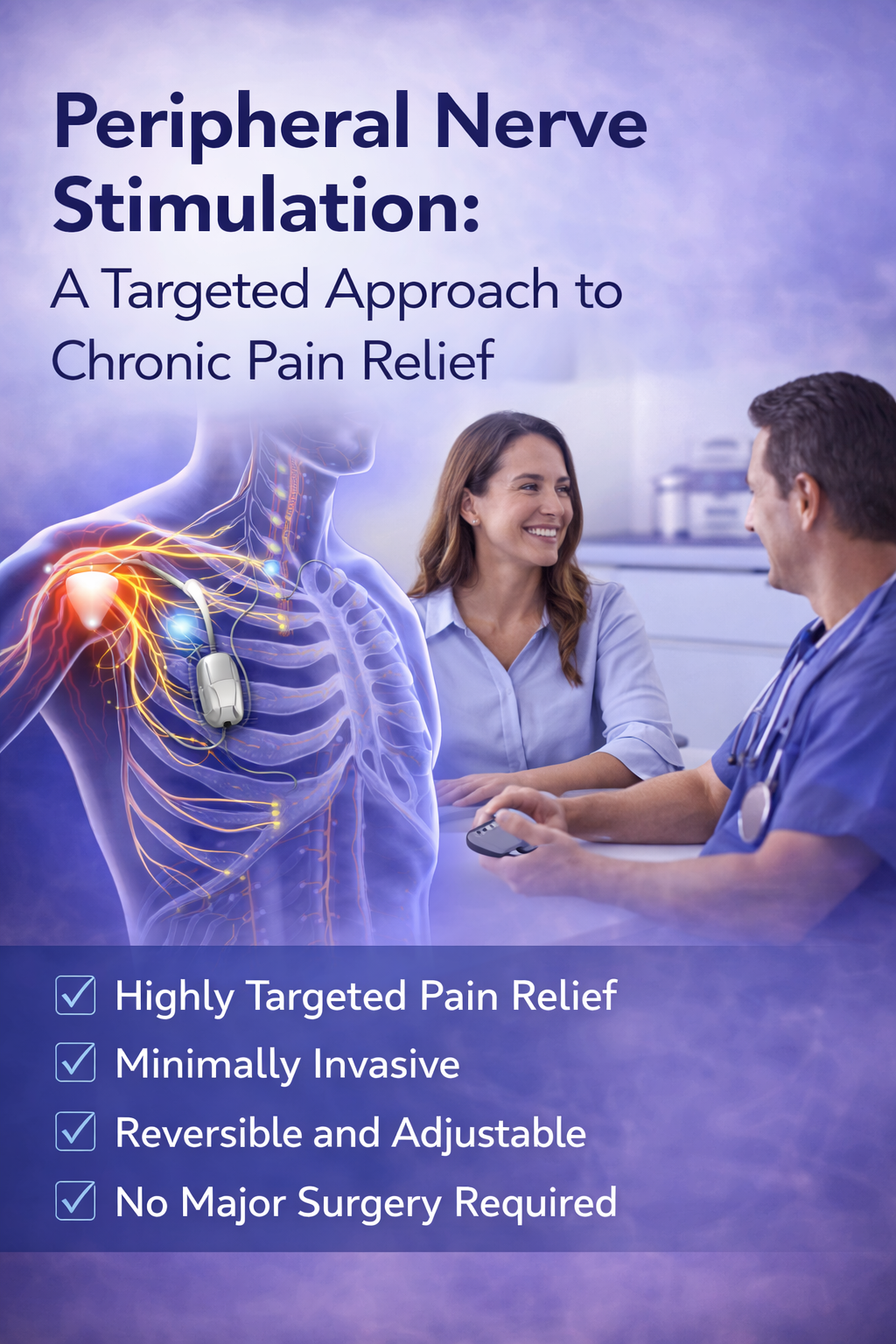
Peripheral Nerve Stimulation: A Targeted Approach to Chronic Pain Relief
Chronic pain can interfere with your ability to work, move, and enjoy daily life. If traditional treatments haven’t provided lasting relief, peripheral nerve stimulation (PNS) may be an effective, minimally invasive option.
At Deseret Rock Pain Specialists, we offer advanced therapies like PNS to help patients reduce pain and improve function—without major surgery.
What Is Peripheral Nerve Stimulation?
Peripheral nerve stimulation is a treatment that uses small electrical impulses to target specific nerves outside of the spinal cord (peripheral nerves).
A tiny wire (lead) is placed near the affected nerve, delivering gentle electrical signals that:
- Disrupt pain signals
- Reduce the perception of pain
- Improve overall comfort and function
Unlike spinal cord stimulation, PNS targets specific peripheral nerves rather than the spinal cord itself.
What Conditions Can PNS Treat?
Peripheral nerve stimulation can be used for a variety of pain conditions, including:
- Chronic shoulder pain
- Knee pain (including post-surgical pain)
- Low back pain
- Neuropathic pain (nerve-related pain)
- Occipital neuralgia (head and neck pain)
- Post-traumatic or post-surgical pain
It’s especially helpful when pain is localized to a specific nerve distribution.
What to Expect During the Procedure
PNS is typically performed in a minimally invasive, outpatient setting.
During the Procedure:
- The skin is numbed with local anesthetic
- Using ultrasound or fluoroscopic image guidance, a small lead is placed near the target nerve
- The device is connected to a small external or implanted stimulator
The procedure usually takes 30–60 minutes.
Trial and Treatment Options
Depending on the system used, PNS may involve:
- A temporary system (commonly used for 60 days)
- Or a longer-term implanted system
Many patients begin with a trial period of 5-7 days to evaluate how well the therapy reduces their pain.
Recovery and Results
- Most patients resume normal activities within a few days
- Pain relief may begin within days to weeks
Benefits Patients May Experience:
- Reduced pain intensity
- Improved mobility and function
- Decreased reliance on medications
- Better quality of life
Benefits of Peripheral Nerve Stimulation
- ✔ Highly targeted pain relief
- ✔ Minimally invasive
- ✔ Reversible and adjustable
- ✔ No major surgery required
- ✔ Can be used when other treatments fail
Risks and Considerations
Peripheral nerve stimulation is generally safe, but potential risks include:
- Infection
- Nerve irritation or injury
- Lead movement or displacement
- Skin irritation at the site
- Device-related issues
Serious complications are uncommon.
Is Peripheral Nerve Stimulation Right for You?
You may be a candidate if:
- You have chronic, localized nerve pain
- Conservative treatments have not provided enough relief
- You want a non-surgical, targeted treatment option
A thorough evaluation will help determine if PNS is appropriate for your condition.
Take the Next Step Toward Pain Relief
At Deseret Rock Pain Specialists, we provide innovative, personalized pain solutions to help you get back to living fully.
📍 3665 S. 8400 W. Ste 200, Magna, UT 84044 📞 801-961-4010 🌐 deseretrock.com
Contact us today to schedule a consultation and learn if peripheral nerve stimulation is right for you.
Have Questions About Pain Management?
Our team of specialists is here to help. Schedule a consultation to discuss your specific needs.
This content is for informational purposes only and is not medical advice. Always seek care from a qualified clinician for diagnosis and treatment. If you are experiencing a medical emergency, call 911 immediately.