Pain Management
PRE PROCEDURE INSTRUCTIONS
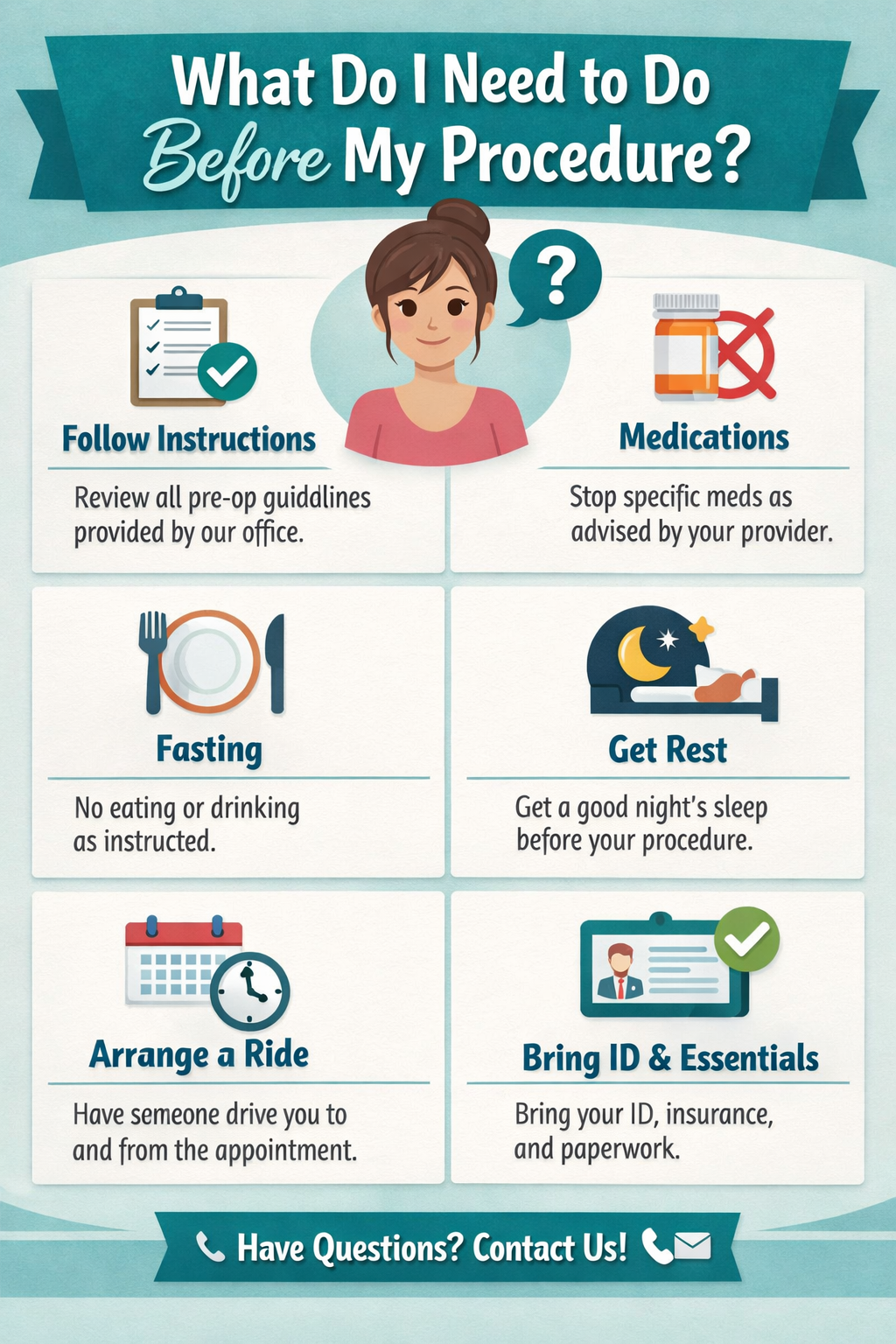
WHAT DO I NEED TO DO BEFORE MY UPCOMING PROCEDURE?
Medication Instructions:
- Stop over the counter blood-thinning medications such as Excedrin Migraine, Bayer Back & Body, and other aspirin-containing products 7 days prior to your procedure, unless otherwise directed.
- Common blood thinners include (but are not limited to):
- Warfarin (Coumadin)
- Apixaban (Eliquis)
- Rivaroxaban (Xarelto)
- Dabigatran (Pradaxa)
- Clopidogrel (Plavix)
- Ticagrelor (Brilinta)
- Aspirin (all forms)
- NSAIDs (such as ibuprofen, naproxen)
- If you are currently taking a prescribed blood thinner and have not been given instructions if or when to stop it, you must contact our office before your procedure for specific guidance.
- Notify our office immediately if you are currently taking or are prescribed antibiotics for an active infection prior to your procedure. Your procedure may need to be delayed for your safety.
- Do not stop prescription medications unless you have been specifically instructed to do so by your provider.
- If you are unsure whether a medication is safe to continue, please call our office for clarification.
- Important: Failure to notify our office in advance about blood thinners, infections, or antibiotic use may result in delays or rescheduling of your procedure for your safety.
Sedation Instructions (If Planned):
If your procedure is scheduled with sedation, please follow these important instructions:
- Nothing to eat or drink for 8 hours prior to your procedure (this includes water, gum, and mints).
- You must have a driver present to take you home after the procedure. You will not be allowed to drive yourself.
- Elective sedation requires a cash payment at the time of your procedure.
- Failure to follow these instructions may result in delay or cancellation of your procedure.
What to Expect with Sedation:
- Sedation is used to help you relax and remain comfortable during your procedure.
- Most patients feel drowsy and may or may not remember parts of the procedure.
- You will be monitored closely by medical staff throughout.
- After the procedure, you may feel sleepy, dizzy, or slightly unsteady for a few hours.
After sedation:
- Do not drive, operate machinery, or make important decisions for the rest of the day
- Plan to rest at home
- A responsible adult should stay with you for several hours if possible
Have Questions About Pain Management?
Our team of specialists is here to help. Schedule a consultation to discuss your specific needs.
This content is for informational purposes only and is not medical advice. Always seek care from a qualified clinician for diagnosis and treatment. If you are experiencing a medical emergency, call 911 immediately.