Radiculopathy: Understanding Pinched Nerves and Radiating Pain
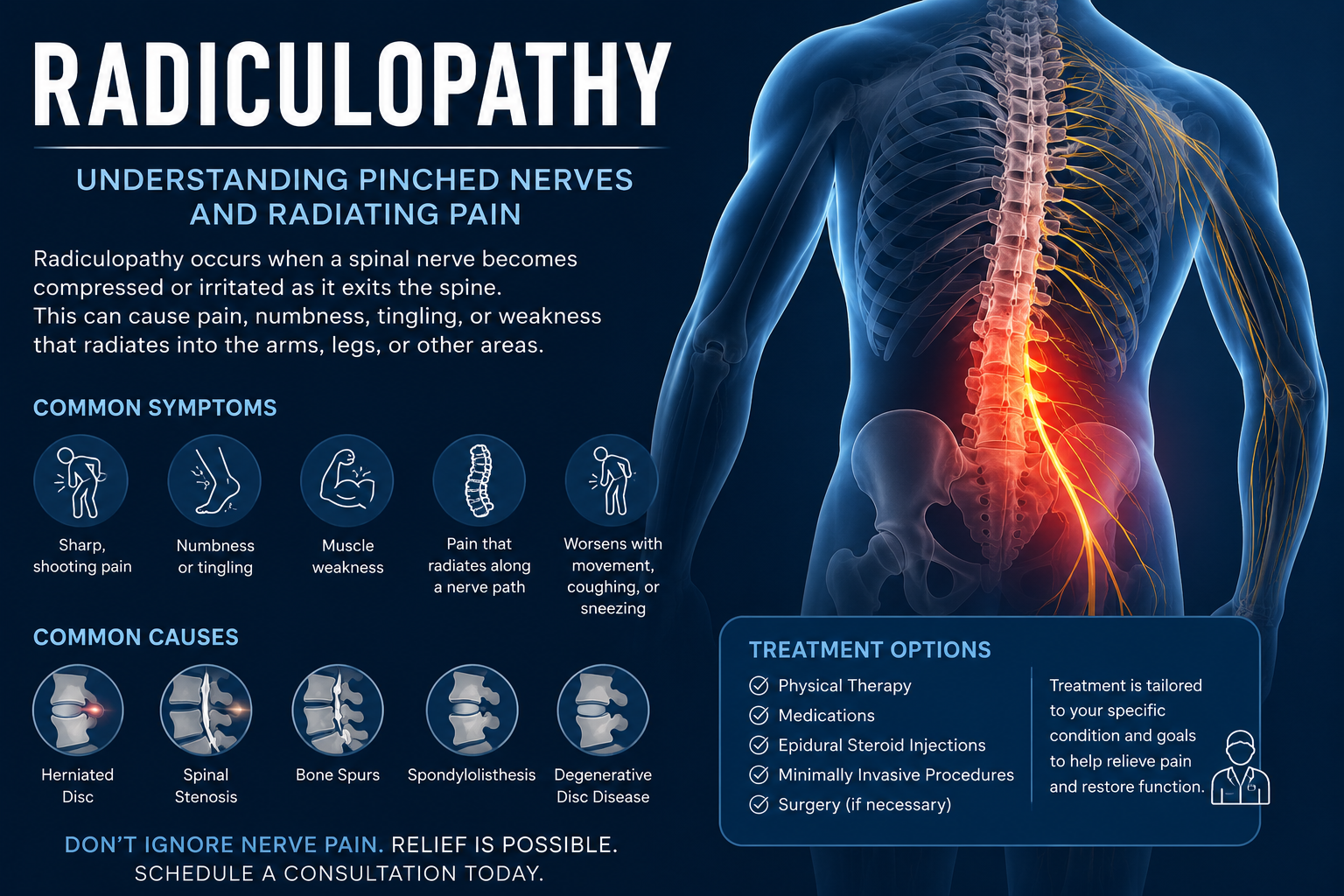
Radiculopathy: Understanding Pinched Nerves and Radiating Pain
If you've ever experienced pain shooting down your arm or leg, accompanied by numbness, tingling, or weakness, you may be dealing with radiculopathy—commonly referred to as a "pinched nerve."
Radiculopathy may remind you of something from Harry Potter but it is a common condition that affects millions of people and can significantly interfere with work, sleep, exercise, and daily activities. Fortunately, many patients improve with conservative care, and minimally invasive treatments can provide lasting relief when symptoms persist.
At Deseret Rock Pain Specialists, we specialize in diagnosing the exact cause of nerve pain and developing individualized treatment plans to help patients regain function and improve their quality of life.
What Is Radiculopathy?
Radiculopathy occurs when a spinal nerve becomes irritated, inflamed, or compressed as it exits the spine. Because spinal nerves travel into the arms and legs, symptoms are often felt far away from the spine itself.
Depending on which nerve is affected, pain may travel:
- Into the shoulder or arm (cervical radiculopathy)
- Around the chest (thoracic radiculopathy)
- Into the buttock, thigh, calf, or foot (lumbar radiculopathy)
Many people refer to lumbar radiculopathy as sciatica, although sciatica specifically describes irritation of the sciatic nerve.
Common Symptoms
Symptoms vary depending on which nerve root is involved but often include:
- Sharp, shooting, or burning pain
- Numbness or tingling
- "Pins and needles" sensations
- Muscle weakness
- Pain that worsens with coughing, sneezing, or certain movements
- Difficulty lifting objects, gripping, walking, or climbing stairs
Some patients experience mostly pain, while others notice weakness, tingling, buzzing or loss of sensation.
What Causes Radiculopathy?
Several conditions can place pressure on spinal nerves.
Common causes include:
Herniated Disc
A damaged spinal disc may bulge or rupture, pressing on a nearby nerve root.
Degenerative Disc Disease
As discs lose water and height with age, the openings where nerves exit the spine can become narrower.
Bone Spurs (Osteoarthritis)
Arthritic changes can produce extra bone that crowds the nerve.
Spinal Stenosis
Narrowing of the spinal canal or nerve openings may compress spinal nerves.
Spondylolisthesis
When one vertebra slips forward over another, nerve roots may become compressed.
Less commonly, infections, tumors, fractures, or cysts can also cause radiculopathy.
Cervical vs. Lumbar Radiculopathy
Cervical Radiculopathy
Affects nerves in the neck and commonly causes:
- Neck pain
- Shoulder pain
- Arm pain
- Hand numbness
- Grip weakness
Lumbar Radiculopathy
Affects nerves in the lower back and commonly causes:
- Low back pain
- Buttock pain
- Leg pain
- Foot numbness
- Weakness when walking or lifting the foot
How Is Radiculopathy Diagnosed?
An accurate diagnosis begins with a detailed history and physical examination.
Your provider will evaluate:
- Pain pattern
- Muscle strength
- Reflexes
- Sensation
- Walking ability
- Specific nerve tension tests
Additional testing may include:
- MRI
- CT scan
- X-rays
- EMG and nerve conduction studies when appropriate
These tests help identify which nerve is affected and determine the underlying cause.
Treatment Options
Many patients improve with conservative treatment.
Activity Modification
Avoiding activities that worsen symptoms while remaining as active as possible often promotes recovery.
Physical Therapy
A structured therapy program can improve flexibility, strengthen supporting muscles, and reduce pressure on irritated nerves.
Medications
Depending on your symptoms, treatment may include:
- Anti-inflammatory medications
- Acetaminophen
- Neuropathic pain medications
- Short-term muscle relaxants
Epidural Steroid Injections
When pain persists despite conservative treatment, an epidural steroid injection can reduce inflammation around the affected nerve.
These minimally invasive procedures are performed using X-ray guidance to precisely deliver medication to the irritated nerve root.
Many patients experience meaningful pain relief that allows them to return to physical therapy and normal activities.
When Is Surgery Needed?
Most patients improve without surgery.
However, surgery may be considered if there is:
- Progressive muscle weakness
- Loss of bowel or bladder control (medical emergency)
- Severe pain despite appropriate treatment
- Persistent symptoms affecting quality of life
Your pain specialist and spine surgeon can help determine whether surgery is appropriate.
When Should You See a Pain Specialist?
You should seek evaluation if:
- Pain lasts longer than several weeks
- Pain radiates into an arm or leg
- You develop numbness or weakness
- Symptoms interfere with work or sleep
- Conservative treatments have not helped
Early diagnosis often leads to more effective treatment and better outcomes.
How Deseret Rock Pain Specialists Can Help
At Deseret Rock Pain Specialists, we use advanced diagnostic techniques to identify the true source of your nerve pain. Our goal is to relieve symptoms, restore function, and help patients avoid surgery whenever possible.
We offer comprehensive, evidence-based treatments including:
- Fluoroscopically guided epidural steroid injections
- Selective nerve root blocks
- Physical therapy recommendations
- Medication management when appropriate
- Coordination with spine surgeons when necessary
Every treatment plan is personalized to your specific diagnosis and goals.
Frequently Asked Questions
Is radiculopathy the same as sciatica? Sciatica is a type of lumbar radiculopathy involving irritation of the sciatic nerve. Not all radiculopathy is sciatica.
Can a pinched nerve heal on its own? Yes. Many cases improve over several weeks with conservative treatment, although persistent symptoms should be evaluated.
Are epidural steroid injections safe? When performed by experienced physicians using image guidance, epidural steroid injections are generally considered safe and can provide significant pain relief for appropriately selected patients.
Can radiculopathy cause permanent nerve damage? Most cases resolve without permanent problems. However, prolonged or severe nerve compression can sometimes lead to lasting weakness or numbness, making early evaluation important.
Have Questions About Pain Management?
Our team of specialists is here to help. Schedule a consultation to discuss your specific needs.
This content is for informational purposes only and is not medical advice. Always seek care from a qualified clinician for diagnosis and treatment. If you are experiencing a medical emergency, call 911 immediately.