Radiofrequency Ablation for Pain Relief
Radiofrequency Ablation for Pain Relief: What You Need to Know
Chronic pain can significantly impact your quality of life—making even simple daily activities difficult. If you’ve tried medications, physical therapy, or injections with limited relief, radiofrequency ablation (RFA) may be an effective next step.
At Deseret Rock Pain Specialists, we offer advanced, minimally invasive treatments like RFA to help patients regain function and reduce pain.
What Is Radiofrequency Ablation?
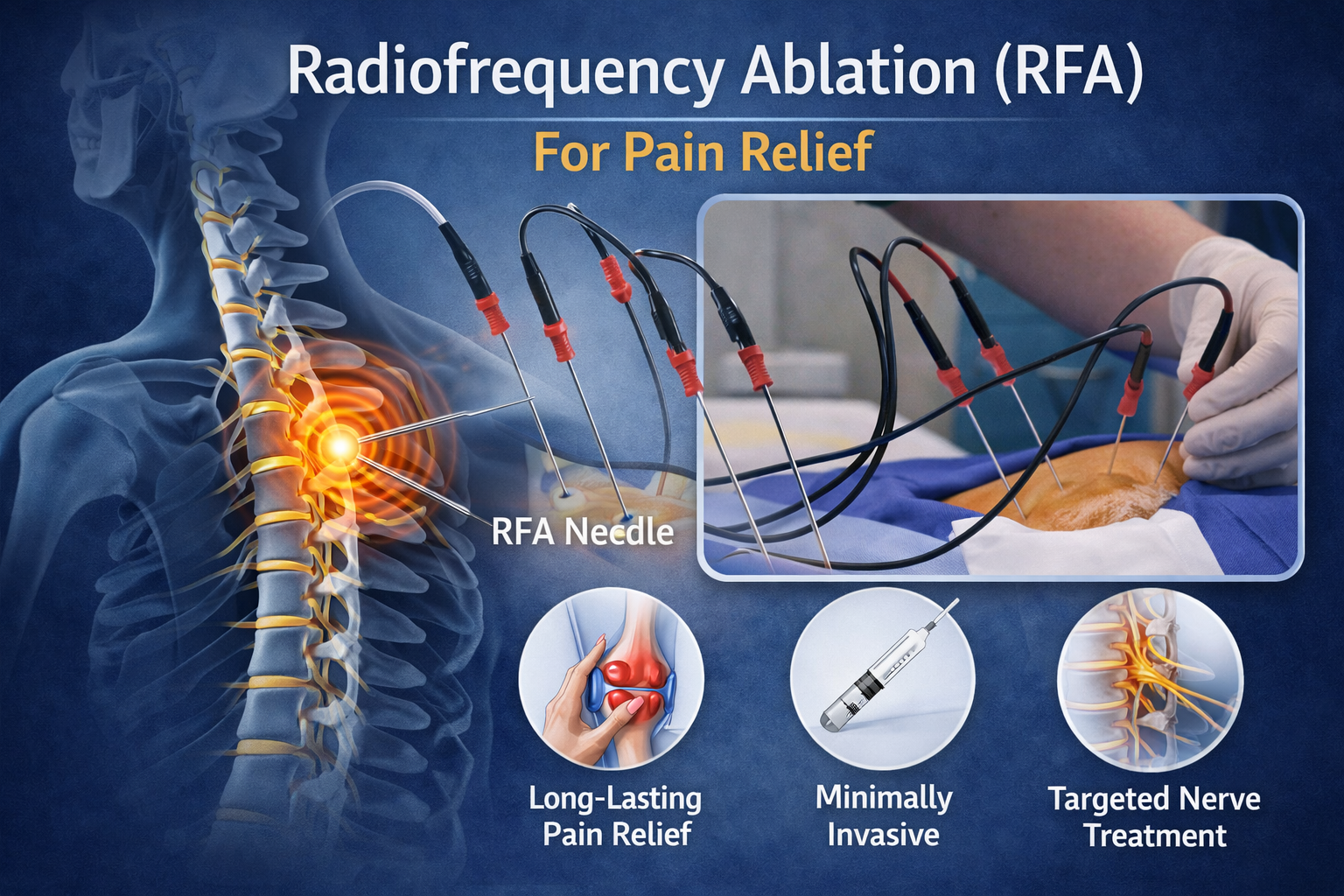
Radiofrequency ablation is a minimally invasive procedure that uses heat generated by radiofrequency energy to target specific nerves responsible for transmitting pain signals.
By interrupting these pain signals, RFA can provide long-lasting relief—often for 6 to 12 months or longer.
Common Conditions Treated with RFA
RFA is most commonly used for pain originating from joints and nerves in the spine, but it can also be used in other areas. Common indications include:
- Chronic neck pain (cervical facet joints)
- Chronic low back pain (lumbar facet joints)
- Sacroiliac (SI) joint pain
- Knee pain (especially osteoarthritis)
- Hip pain
- Post-injury or post-surgical nerve pain
Patients typically undergo diagnostic nerve blocks first to confirm that the targeted nerve is the source of pain before proceeding with RFA.
What to Expect During the Procedure
Radiofrequency ablation is performed in an outpatient setting and usually takes around 30 minutes.
Before the Procedure
- You may be asked to avoid eating for several hours
- Medications will be reviewed
- Light sedation may be offered for comfort
During the Procedure
- You will lie comfortably on a procedure table
- The skin is cleaned and numbed with local anesthetic
- Using fluoroscopy (X-ray guidance), a specialized needle is placed near the target nerve
- A small test stimulation confirms correct placement
- Heat is applied to the nerve for a short period (typically 90-180 seconds per site)
After the Procedure
- You’ll be monitored briefly and discharged the same day
- Most patients return to normal activity within 24–72 hours
Recovery and Results
It’s normal to experience some temporary soreness or increased pain for a few days after the procedure.
Pain relief typically begins within:
- 1–3 weeks for most patients
Full effect is typically expected within:
- 4-6 weeks for most patients
Many patients experience significant improvement in:
- Pain levels
- Mobility
- Ability to perform daily activities
Relief can last 6–12 months or longer, and the procedure can be repeated if needed.
Risks and Side Effects
Radiofrequency ablation is generally very safe, but like any medical procedure, it carries some risks:
Common (Temporary)
- Soreness at the injection site
- Mild swelling or bruising
- Temporary numbness or tingling
Less Common
- Infection
- Bleeding
- Nerve irritation or injury
- Allergic reaction to medications
Serious complications are rare, especially when performed by experienced providers.
Is RFA Right for You?
You may be a good candidate for radiofrequency ablation if:
- You have chronic pain lasting more than 3–6 months
- Conservative treatments haven’t provided lasting relief
- You experienced temporary relief from diagnostic nerve blocks
- You want to reduce reliance on medications
Take the Next Step Toward Pain Relief
If chronic pain is limiting your life, radiofrequency ablation may be an effective solution to help you move forward.
At Deseret Rock Pain Specialists, we specialize in personalized, evidence-based pain treatments designed to get you back to doing what you love.
📍 3665 S. 8400 W. Ste 200, Magna, UT 84044 📞 801-961-4010 🌐 deseretrock.com
Have Questions About Pain Management?
Our team of specialists is here to help. Schedule a consultation to discuss your specific needs.
This content is for informational purposes only and is not medical advice. Always seek care from a qualified clinician for diagnosis and treatment. If you are experiencing a medical emergency, call 911 immediately.