Sacroiliitis: A Common Cause of Lower Back Pain
Sacroiliitis: Is Your Lower Back Pain Actually Coming From Your SI Joint?
If you've been struggling with pain in your lower back, buttocks, or hips, you may have been told it's "just sciatica" or "arthritis." However, another common—and often overlooked—cause of pain is sacroiliitis, or inflammation of the sacroiliac (SI) joint.
At Deseret Rock Pain Specialists, we help patients identify the true source of their pain and provide targeted treatments that can help them return to the activities they enjoy.
What Is the Sacroiliac (SI) Joint?
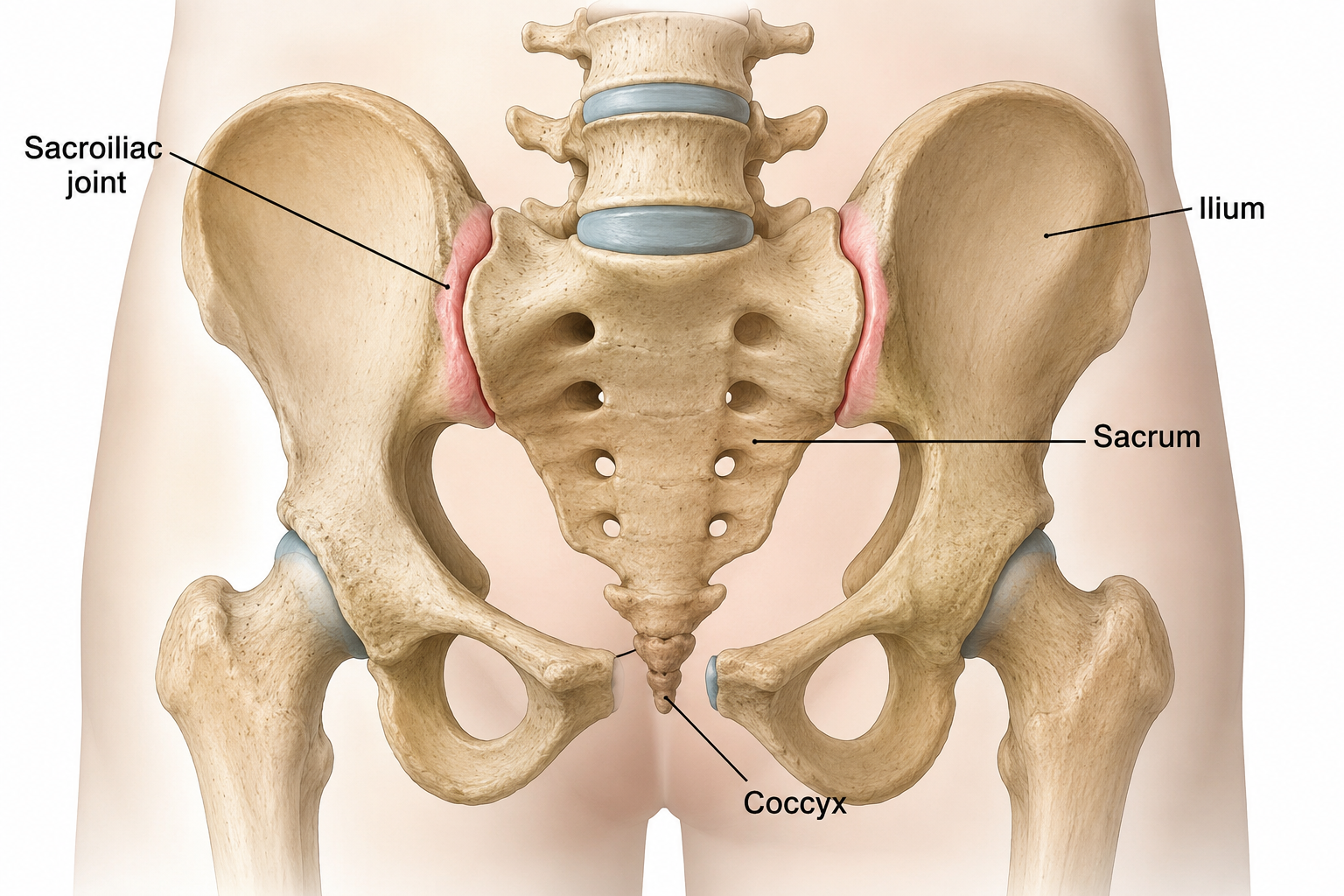
The sacroiliac joints connect the bottom of your spine (the sacrum) to your pelvis (the iliac bones). You have one SI joint on each side.
These joints:
- Transfer the weight of your upper body to your legs
- Provide stability while standing and walking
- Absorb shock during movement
Although they only move a small amount, even minor inflammation or dysfunction can cause significant pain.
What Is Sacroiliitis?
Sacroiliitis refers to inflammation of one or both SI joints. It can occur suddenly after an injury or develop gradually over time due to wear and tear.
The pain often mimics other conditions such as:
- Herniated discs
- Sciatica
- Hip arthritis
- Lumbar facet arthritis
Because symptoms overlap, sacroiliitis is frequently underdiagnosed.
Symptoms of Sacroiliitis
Common symptoms include:
- Pain over the lower back or upper buttock(s)
- Pain that may radiate into the hips, groin, or back of the thighs
- Pain that is worse when standing for long periods
- Difficulty getting out of bed or rising from a chair
- Pain when climbing stairs
- Increased discomfort when walking, running, or turning over in bed
- Point tenderness directly over the SI joint
Unlike true sciatica, SI joint pain usually does not extend below the knee or cause numbness and weakness, although some patients feel pain that closely resembles sciatica.
What Causes Sacroiliitis?
Several conditions can irritate the SI joint, including:
- Osteoarthritis
- Pregnancy and childbirth
- Previous lumbar spine surgery
- Falls or traumatic injuries
- Unequal leg length
- Repetitive lifting or twisting
- Sports injuries
- Inflammatory arthritis (such as ankylosing spondylitis or psoriatic arthritis)
- Infection (rare)
Risk factors include obesity, physically demanding jobs, and previous injuries to the pelvis or lower back.
How Is Sacroiliitis Diagnosed?
There is no single test that definitively diagnoses SI joint pain.
Instead, diagnosis involves:
Medical History
Your provider will discuss:
- Where your pain is located
- What activities worsen or relieve it
- Previous injuries or surgeries
Physical Examination
Several specialized maneuvers stress the SI joint. If multiple tests reproduce your typical pain, the SI joint becomes a likely source.
Imaging
X-rays, CT scans, or MRI may help identify arthritis, inflammation, fractures, or other conditions. However, many patients with SI joint pain have imaging that appears normal.
Diagnostic SI Joint Injection
The most accurate way to confirm SI joint pain is with a fluoroscopically guided injection of local anesthetic into the SI joint.
If your pain improves significantly after the injection, it strongly suggests the SI joint is the primary pain generator.
Treatment Options
Treatment depends on the cause and severity of your symptoms.
Activity Modification
Short periods of avoiding activities that aggravate symptoms can help calm inflammation.
Physical Therapy
Therapy focuses on:
- Core strengthening
- Pelvic stabilization
- Hip mobility
- Flexibility
- Improving body mechanics
Many patients experience meaningful improvement with a structured exercise program.
Medications
Depending on your situation, your provider may recommend:
- Anti-inflammatory medications (NSAIDs)
- Acetaminophen
- Topical anti-inflammatory creams
- Short-term muscle relaxants
- Oral steroids
SI Joint Injections
When conservative treatments are not enough, a corticosteroid injection into the SI joint can reduce inflammation and provide substantial pain relief.
The procedure:
- Takes only a few minutes
- Is performed using fluoroscopic (X-ray) guidance for precision
- Typically allows patients to return home shortly afterward
- Can both diagnose and treat SI joint pain
Relief may last several weeks to many months. Some may never need another injection again.
Radiofrequency Ablation (RFA)
For patients who obtain temporary relief from diagnostic nerve blocks, radiofrequency ablation may provide longer-lasting pain relief by interrupting the nerves transmitting pain from the SI joint.
Relief commonly lasts 6–12 months, and sometimes longer.
When Should You See a Pain Specialist?
You should consider evaluation if:
- Pain has lasted longer than six weeks
- Conservative treatment hasn't helped
- Walking or standing has become difficult
- Pain interferes with work, sleep, or daily activities
- You're unsure whether your pain is coming from your back, hip, or SI joint
An accurate diagnosis is the first step toward effective treatment.
Why Choose Deseret Rock Pain Specialists?
At Deseret Rock Pain Specialists, we specialize in identifying the exact source of spinal and joint pain. Our goal is to avoid unnecessary surgery whenever possible by offering evidence-based, minimally invasive treatments tailored to each patient.
Using advanced imaging guidance, we perform precise diagnostic and therapeutic procedures to help patients reduce pain, improve function, and return to the activities they enjoy.
If you're experiencing persistent pain in your lower back, buttocks, or hips, schedule an evaluation today. Together, we'll determine whether your SI joint may be contributing to your symptoms and develop a treatment plan designed specifically for you.
Frequently Asked Questions
Can sacroiliitis heal on its own? Some mild cases improve with rest, physical therapy, and anti-inflammatory medications. Chronic SI joint dysfunction often requires additional treatment.
Is sacroiliitis the same as sciatica? No. Sciatica results from irritation of the sciatic nerve, while sacroiliitis involves inflammation of the SI joint. The symptoms can feel very similar, making a careful evaluation important.
How successful are SI joint injections? Many patients experience meaningful pain relief, particularly when the SI joint is accurately identified as the pain source. Relief may last from weeks to several months.
Will I need surgery? Most patients improve with non-surgical treatments. Surgery is generally reserved for patients with persistent symptoms who have not responded to comprehensive conservative care.
Have Questions About Pain Management?
Our team of specialists is here to help. Schedule a consultation to discuss your specific needs.
This content is for informational purposes only and is not medical advice. Always seek care from a qualified clinician for diagnosis and treatment. If you are experiencing a medical emergency, call 911 immediately.